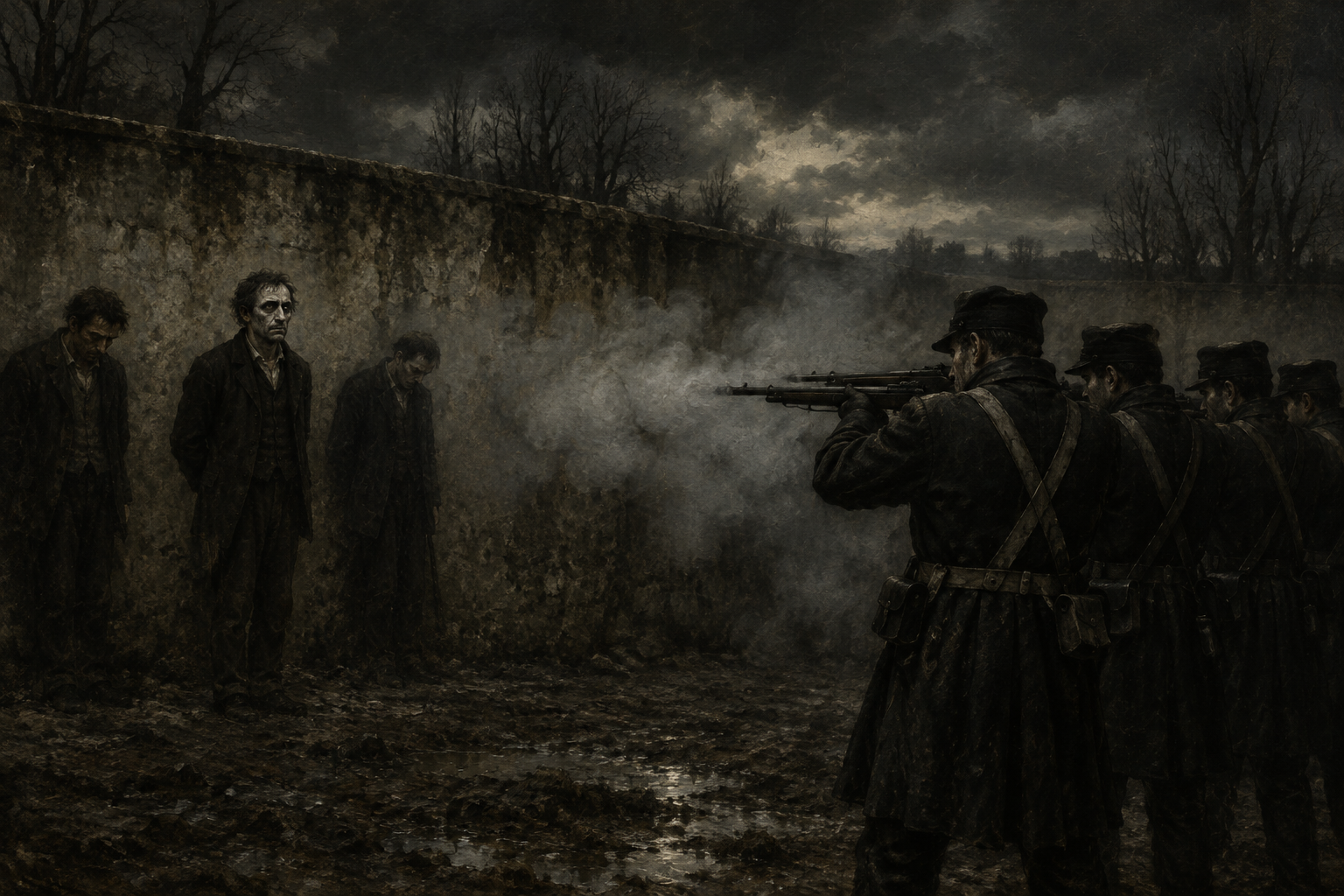
Execution Alert: Texas
Jamaal Howard, TDCJ #999383. Scheduled for Wednesday, October 7, 2026, 6:00 PM CT, Huntsville.
In May 2000, Jamaal Howard, then 20 years old, shot and killed Vickie Swartout, a clerk at a Chevron station in Silsbee, Hardin County. Investigators say he took $114 and a carton of cigarettes. Ms. Swartout’s death was a real loss to a real family, and nothing in this digest diminishes that.
What the record also shows: Howard was shot in the head three years before the crime. After trial he cycled between death row and the prison psychiatric hospital, medicated with Haldol for diagnosed schizophrenia. His IQ testing fell in the impaired range, yet his trial lawyer never had him evaluated for intellectual disability. His disability claim was rejected under Texas’s old Briseno framework, the same test the U.S. Supreme Court struck down in Moore v. Texas in 2017 and again found Texas misapplying in 2019.
Where things stand: On September 28 his attorneys filed a new intellectual disability claim. According to his legal team, the Texas Court of Criminal Appeals dismissed that petition and the stay motion without reaching the merits. Counsel has asked Governor Abbott for a one-time 30-day reprieve, citing the state’s refusal to disclose details about its pentobarbital supply, the same drug used in Tennessee’s failed execution of Christa Pike last week. As of this writing, the Governor has given no indication he will intervene. If carried out, Howard would be the sixth Black man in a row executed by Texas.
The question is never only what someone did. It is whether the process that condemned him was fair enough to justify the one punishment we can never take back. A man whose disability claim was decided under an unconstitutional test, and who has never had a hearing on his current mental condition, has not received that process.
Military Execution: Nidal Hasan Ordered to Firing Squad
On Monday, chief Pentagon spokesman Sean Parnell announced that President Trump approved execution by Army firing squad for former Army Major Nidal Malik Hasan, convicted for the November 5, 2009 shooting at the Fort Hood Soldier Readiness Center that killed 12 active duty soldiers and one retired serviceman and wounded 32 others. Among the dead was Pfc. Francheska Velez, who was pregnant. The Secretary of the Army will set the time and place.
The facts readers should know
This would be historic. The U.S. military has not executed anyone since 1961, and that execution was by hanging. The last known military firing squad execution was in 1945. Military death sentences cannot be carried out without the President’s personal approval.
The method is not in the rulebook. The military’s current execution regulations specify lethal injection. The Pentagon has not explained why it chose a firing squad. In April the administration added firing squad, gas asphyxiation, and electrocution as approved federal methods.
The clock. Under the procedures now triggered, the Army must be ready to carry out the execution no sooner than 60 days and no later than 150 days after presidential approval. That puts the earliest window in early December 2026.
It is not over legally. Hasan’s last military appeal was rejected in April 2025. He may still file a habeas corpus petition in civilian federal court, which could pause the process, potentially for years.
Military death row is tiny. Four men, including Hasan, are on the military’s death row at Fort Leavenworth, Kansas.
Martyr? Or not?
Let me be plain: Hasan’s guilt is not in doubt. He admitted being the shooter. This is the hardest kind of case for anyone who opposes the death penalty, and it is exactly why it matters.
Consider how this death sentence was obtained. Hasan fired his lawyers and represented himself. He called no witnesses and made no closing argument. His standby counsel asked to withdraw, telling the court it would be morally repugnant to help a client pursue his own execution. A capital trial is supposed to be adversarial. Here, the defendant and the prosecution wanted the same outcome. When the government’s case meets no resistance at all, the verdict tells us less than we think about whether the system is working.
Consider, too, what Hasan himself wants. He has spent years casting himself as a soldier who “switched sides.” Counterterrorism analysts warned back in 2013 that executing him could hand jihadist propaganda the martyr it is looking for. The lead prosecutor promised jurors Hasan would “never be a martyr.” A firing squad, carried out by his former Army, may be the most dramatic way to break that promise.
And consider the precedent. The first military execution in over six decades, using a method the military’s own regulations do not list, chosen without public explanation, will not stay confined to the worst case. Methods and procedures approved for the most hated defendant become available for the next one, whose guilt or competence may be far less certain.
Hasan is paralyzed from the waist down and has been imprisoned since 2009. He will die in custody either way. The question for the public is not whether he deserves sympathy. It is whether the government should spend its power giving a self-described martyr the death he asked for.
Tennessee: Christa Pike Update
Six days after Tennessee administered two doses of pentobarbital and failed to kill her, Christa Pike remains hospitalized in critical condition. Her attorneys report she is unconscious and on a ventilator, and is being treated for significant injuries to both arms. As of Sunday, counsel said her prognosis may not be known for several days. Pike designated someone to hold her medical power of attorney, and her defense team has asked the public to respect her privacy.
The timeline matters. A Sixth Circuit panel stayed the execution about an hour before it was set to begin, to review whether evidence of her childhood sexual abuse was ever properly presented at sentencing. The Supreme Court vacated that stay 6 to 3, and the state proceeded that evening. Witnesses reported hearing her snoring loudly after the drugs were given. Her attorneys say the state was warned beforehand that her medical conditions could make lethal injection difficult.
This is Tennessee’s second failed execution in five months, following Tony Carruthers in May. Governor Lee has ordered a third-party review and halted executions. Prison officials and the Attorney General’s office have said little publicly. Pike’s lawyers have filed an emergency motion to preserve all evidence from the attempt.
Florida: Double Execution Set for October 13, and a 20th Warrant
Florida is moving forward with two executions on Tuesday, October 13: William Lee Thompson, 74, and James Robertson, 63. It would be the second time this year Florida has executed two people on the same day.
William Lee Thompson. Thompson was sentenced to death for the 1976 murder, kidnapping, and rape of 23-year-old Sally Ivester in North Miami Beach. After his attorneys raised a competency claim citing dementia, Governor DeSantis issued the statutorily required temporary stay and appointed a three-psychiatrist commission, which examined him October 1. The execution is now proceeding. DeSantis issued similar stays in 2023 and 2025, and both of those executions went forward after evaluation.
The facts of his condition, per his attorneys’ court filings: sepsis, chronic kidney disease, severe fatty liver disease, acute systolic congestive heart failure, dementia, staples in his abdomen from recent colostomy surgery, and staples in his head from a fall. He cannot walk. More than 100 medical professionals have signed a letter asking the Governor to withdraw the warrant. His co-defendant, whose own death sentence was overturned, received life after a retrial. And the jury that recommended Thompson’s death sentence voted 7 to 5, a margin that would not be enough to impose death under Florida’s current law, which requires at least eight jurors.
After watching Tennessee fail twice in five months, including Christa Pike last week, with documented warnings about difficult IV access in both cases, Florida is preparing to place a dying 74-year-old with fragile veins on a gurney. That warning has been given. What happens next is a choice.
James Robertson pleaded guilty to the 2008 killing of his cellmate, Frank Hart, at Charlotte Correctional Institution.
New warrant. Governor DeSantis signed a death warrant Monday for Jesse Guardado, 64, setting a November 5 execution for a 2004 killing in Walton County. It is his 20th warrant this year, putting Florida on pace to break its modern record of 19 executions set in 2025. Guardado pleaded guilty and has argued his penalty phase lawyers failed to investigate and present mitigating evidence. William Reaves Jr., 77, remains scheduled for October 20 for the 1986 killing of Indian River County Deputy Richard Raczkowski.
Upcoming Executions
| Date | State | Name | Status |
|---|---|---|---|
| Oct 7 | Texas | Jamaal Howard | Active; reprieve request pending |
| Oct 13 | Florida | William Lee Thompson | Active; competency stay lifted |
| Oct 13 | Florida | James Robertson | Active |
| Oct 20 | Florida | William Reaves Jr. | Active |
| Nov 5 | Alabama | Michael Taylor | Active; method dispute unresolved |
| Nov 5 | Indiana | Jeffrey Weisheit | Active |
| Nov 5 | Florida | Jesse Guardado | Warrant signed Oct 5 |
| Nov 12 | Oklahoma | James Pavatt | Active; clemency hearing Oct 14 |
| Nov 12 | Texas | John Allen Rubio | Active; competency hearing Oct 7 (ValleyCentral) |
| Nov 19 | Texas | Reinaldo Dennes | Active |
| Early Dec or later | U.S. Military | Nidal Hasan | Approved; date to be set by Army Secretary |
Dates change quickly. Stays and reprieves can come at the last hour. We will update as the record develops.
Leave a Reply